THE GUIDE
Environmental Stress in Plants — Heat, Cold, Wind, Transplant Shock
When nothing in the plant or soil is obviously wrong, the answer is often that the weather has been weird. A PNW gardener's guide to environmental stress diagnosis.
When nothing in the plant or soil is obviously wrong, the answer is often “the weather has been weird.” Plants integrate weather over weeks, and a single cold snap, heat wave, or wind event from three weeks ago can be the cause of what you’re seeing today. This is the cause people most often miss because it requires remembering — or having logged — what the weather was actually doing.
In the PNW specifically: cool spring soil stalls heat-lovers, summer dry stretches stress unirrigated beds, and the occasional surprise heat wave above 95°F can damage cool-loving plants in a single weekend.
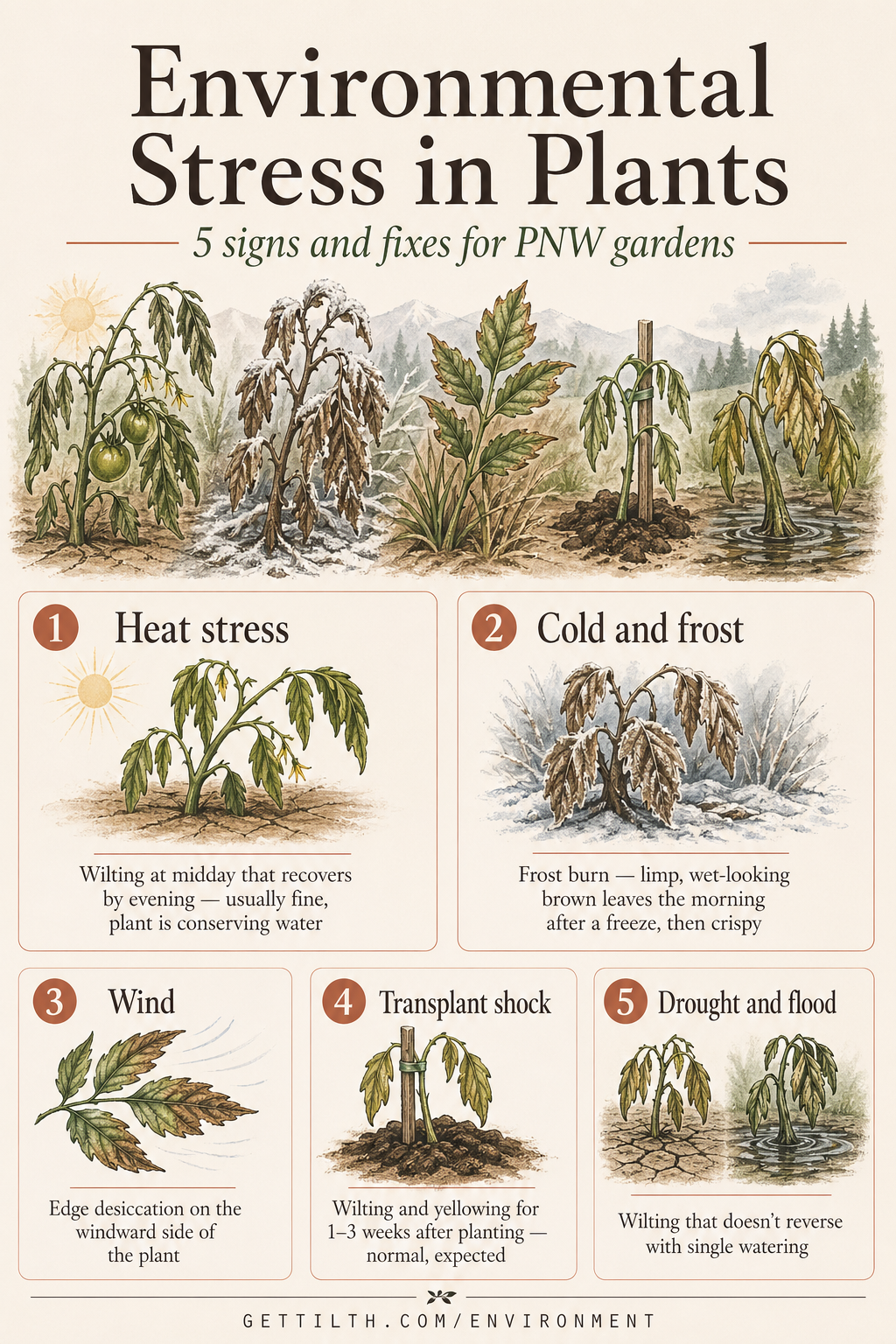
Heat stress
Symptoms
- Wilting at midday that recovers by evening — usually fine, plant is conserving water
- Sustained 90°F+ days — flower drop on tomatoes, peppers, beans; leaf scorch; bolt in cool-weather crops (lettuce, spinach, cilantro)
- Whitish bleached patches on top sun-facing leaves
- Crispy leaf edges appearing within hours of an unusually hot afternoon
Fix
- Mulch heavily — cools soil and retains moisture. Single most effective heat-stress preventive.
- Shade cloth during heat waves — temporary, just for the worst stretches
- Deep watering in early morning, before the heat hits
- Choose heat-tolerant varieties for crops you’re growing in hot beds
- Don’t fertilize during heat waves — adds stress
Cold and frost
Symptoms
- Frost burn — limp, wet-looking brown leaves the morning after a freeze, then crispy
- Cold soil — heat-loving plants (peppers, tomatoes, basil) refuse to grow until soil warms past about 60°F
- Stunted spring growth — many plants pause when soil is too cold
Fix
- Frost cloth or row cover for cold snaps — drape over plants when forecast drops below 35°F
- Cold air pools in low spots — even when official forecasts read above freezing, low areas can frost. Check microclimate.
- Wait for soil to warm before planting heat-lovers. PNW gardens lose 4–6 weeks every spring to gardeners planting too early.
- Black plastic mulch to pre-warm soil for tomatoes, peppers
- Don’t transplant heat-lovers before mid-May in most PNW microclimates
Wind
Symptoms
- Edge desiccation on the windward side of the plant
- Mechanical damage to brittle stems
- Container plants on exposed balconies dry out fast and edges burn
Fix
- Stake or wind-block exposed plants — burlap, snow fence, or a temporary screen
- Move container plants to sheltered positions
- Mulch heavily to retain moisture in soil
- Choose wind-tolerant plants for exposed beds (kale handles wind; lettuce shreds)
Transplant shock
Symptoms
- Wilting and yellowing for 1–3 weeks after planting — normal, expected
- Severe shock from root damage or moving plants in heat — sometimes fatal
Fix
- Plant transplants on overcast days when possible
- Water in well at planting (deep soak)
- Don’t expect production for 2 weeks after transplant
- Don’t fertilize newly transplanted plants — let roots establish first
- Provide temporary shade for severe shock cases
- Harden off seedlings over a week before transplanting (gradual sun exposure)
Drought and flood
Symptoms
Drought:
- Wilting that doesn’t reverse with single watering
- Crispy leaf edges
- Plants dropping leaves in long dry stretches
Flood / waterlogged soil:
- Yellowing leaves on plants in soggy soil
- Root rot symptoms (see watering problems)
- Standing water that doesn’t drain after heavy rain
Fix
For drought:
- Deep watering rather than frequent shallow
- Mulch heavily to retain soil moisture
- PNW summer dry stretches — set up drip irrigation or soaker hoses for unattended beds during summer trips
For flooding:
- Improve drainage — raised beds, compost amendment in heavy clay, French drains for chronic problems
- Don’t replant in waterlogged beds until soil dries
- Check downspouts and grading — bed flooding may be a yard-drainage issue
PNW-specific environmental issues
PNW environment has predictable patterns that catch new gardeners:
Spring (March–May)
- Cold soil delays warm-season crops — tomatoes and peppers should not be transplanted before mid-May
- Late frosts through April; protect tender crops
- Wet spring soil invites damping off, root rot for early plantings
- Strong spring winds can damage young plants on exposed sites
Summer (June–August)
- Long dry stretches — sometimes 6+ weeks without measurable rain. Real watering is needed.
- Occasional heat waves above 90°F — uncommon but happen, and most PNW plants handle them poorly
- Cool nights — summer night lows often drop below 55°F, which limits tomato fruit set
- High humidity — drives powdery mildew on squash family
Fall (September–November)
- Rain returns — reduce supplemental watering
- First frost typically late October to mid-November in lowland PNW
- Late blight conditions in cool wet falls — watch tomatoes
Winter (December–February)
- Mild but wet — rarely below 25°F in lowland PNW
- Waterlogged soil can rot dormant plants (especially Mediterranean herbs, dahlia tubers)
- Frost cloth for overwintering cold-hardy crops in coldest weeks
- Snow load can damage shrubs; brush off heavy snow
How to identify environmental stress
Most environmental stress is self-correcting once conditions normalize — the question is whether the plant has enough reserve to wait. Diagnosis depends on knowing what the recent weather was doing.
If you don’t already log weather, this is one of the strongest cases for using an app or weather log to look back at what conditions preceded a problem. A frost three weeks ago could explain leaf damage today; a heat wave during fruit set could explain poor production a month later.
Plant-specific notes
- Tomato, Pepper — cool nights below 55°F drop fruit set; hot days above 90°F drop flowers; cool spring soil stalls growth
- Lettuce, [Spinach] — bolt in heat above 75°F sustained
- Squash — heat tolerant but powdery mildew thrives in PNW humidity
- Dahlia — winter wet kills tubers in poorly drained soil
- Rhododendron — winter leaf curl is normal heat-conservation, not damage
- Hydrangea — late frost in April–May kills flower buds; afternoon heat causes wilt
Related
- Watering problems — drought and flood interact with watering practices
- Brown leaves — heat scorch, frost damage, wind damage
- Wilting plants — heat stress, transplant shock
- Stunted plants — cool soil
- No flowers / no fruit — heat and cold both affect flowering
- The diagnosis guide — full diagnostic framework