THE GUIDE
Why Is My Plant Wilting? (And How to Tell the Cause)
A wilted plant in dry soil is just thirsty. A wilted plant in wet soil is in serious trouble. A PNW gardener's guide to diagnosing wilting plants.
A wilted plant in dry soil is just thirsty — water it and it recovers. A wilted plant in wet soil is in serious trouble. Wilting that doesn’t recover after a soak is one of the most diagnostic single observations in gardening. The cause is usually root damage, vascular disease, or environmental stress.
This guide walks through the differences and what to do for each.
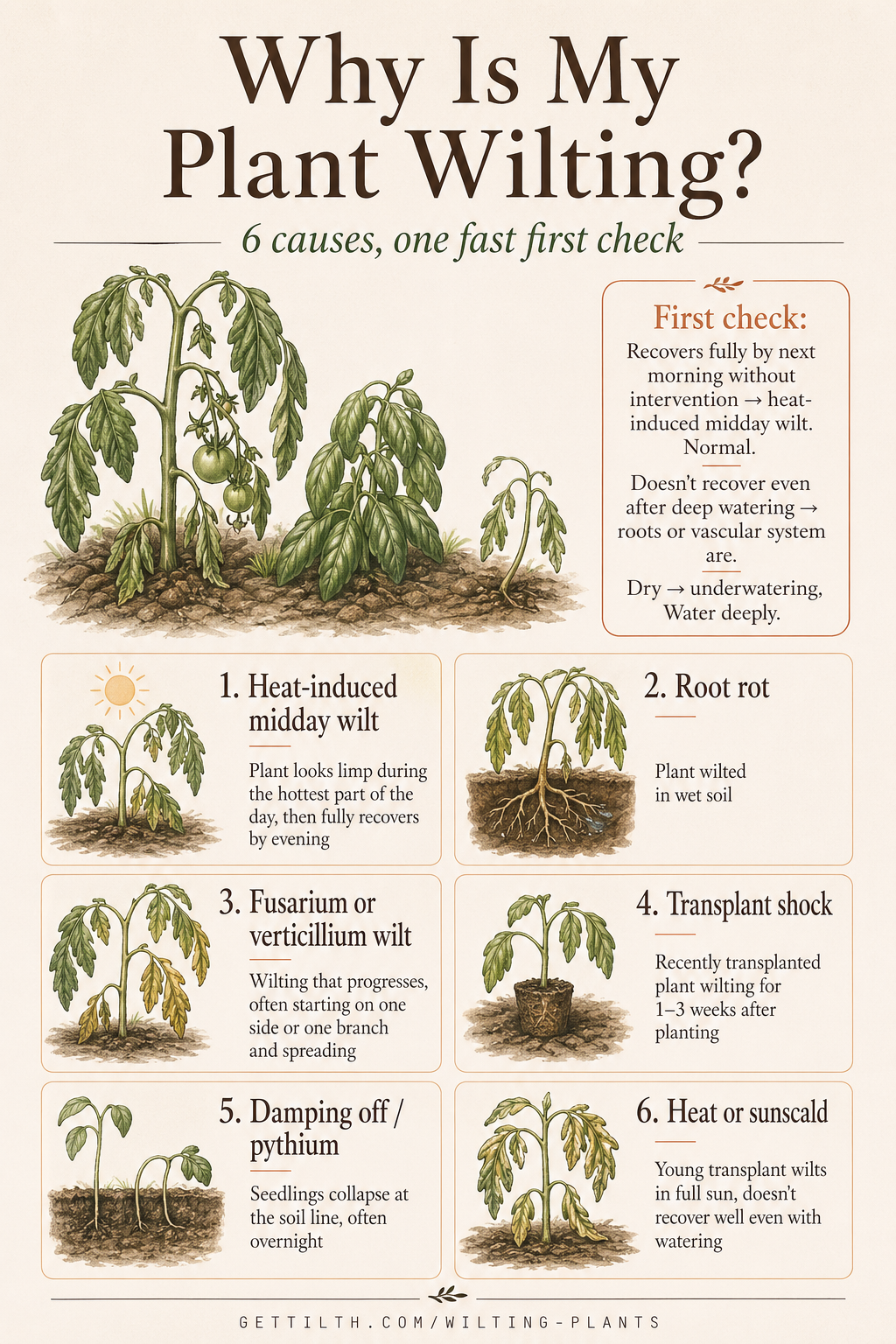
First check: does it recover overnight?
The fastest diagnostic question for any wilting plant:
- Recovers fully by next morning without intervention → heat-induced midday wilt. Normal, harmless.
- Doesn’t recover even after deep watering → roots or vascular system are compromised. Diagnose further.
Then check the soil:
- Dry → underwatering. Water deeply.
- Wet → root rot, vascular disease, or waterlogged soil.
Likely causes
Heat-induced midday wilt
Pattern: Plant looks limp during the hottest part of the day, then fully recovers by evening or morning without any intervention.
Confirm: Soil is moist but plant is wilted in afternoon heat. Plant looks normal in the morning.
Fix: Nothing. This is the plant’s normal heat-stress response. It conserves water by reducing leaf surface area exposed to sun. Hydrangeas, lettuce, and squash do this dramatically — looks alarming, isn’t.
If you’re worried, mulch to keep roots cool and add temporary shade cloth during heat waves above 90°F.
Root rot (from overwatering)
Pattern: Plant wilted in wet soil. Often combined with yellowing leaves. Plant doesn’t recover after watering — because the roots that should take up water are dead or dying.
Confirm: Soil is saturated. Smell at the soil line — if it’s sour or “off,” anaerobic decomposition is happening. Pull a sample plant if you can spare it: black, brown, or mushy roots confirm rot.
Fix: Stop watering. Move container plants out of standing water. Improve drainage in beds. Severely affected plants with full root rot rarely recover; cut your losses and replant in better-drained soil.
Fusarium or verticillium wilt
Pattern: Wilting that progresses, often starting on one side or one branch and spreading. Plant doesn’t recover after watering. Often accompanied by yellowing of older leaves first.
Confirm: Cut a stem near the base. Brown streaks inside the stem (in the vascular tissue) confirm fungal wilt. Soil-borne, hard to eradicate once present.
Fix: Remove and destroy infected plants — don’t compost. Don’t replant the same family in that bed for 4+ years. Some varieties (especially tomatoes and cucumbers) have resistant cultivars labeled VFN or VFFNT — choose those if you’ve had wilt disease.
Transplant shock
Pattern: Recently transplanted plant wilting for 1–3 weeks after planting. Plant looks droopy but the leaves don’t curl crispy.
Confirm: Was the plant transplanted in the past 2 weeks? Recently moved or repotted?
Fix: Water deeply at planting and keep soil consistently moist (not wet) for 2 weeks. Transplant on overcast days when possible. Don’t fertilize newly transplanted plants — let roots establish first. Most plants recover on their own once roots establish.
Damping off / pythium (seedlings)
Pattern: Seedlings collapse at the soil line, often overnight. Common in cool, wet conditions. PNW spring is prime season for this.
Confirm: Stem is pinched or rotted at the soil line. Seedlings simply tip over.
Fix: Improve drainage and air circulation around seedlings. Don’t overwater. Use sterile seed-starting mix rather than garden soil. Once damping off has started in a flat, the affected seedlings won’t recover.
Heat or sunscald (young transplants)
Pattern: Young transplant wilts in full sun, doesn’t recover well even with watering. Leaves may also show brown patches.
Confirm: Plant was just moved from indoors or shade to full sun without hardening off.
Fix: Provide temporary shade for 5–7 days. The plant will adapt over the next week. Always harden off transplants over a week before exposing to full sun.
Plant-specific notes
- Hydrangea — wilts dramatically in afternoon heat; almost always recovers overnight if soil is moist. Don’t panic.
- Lettuce — afternoon wilt that recovers overnight is normal. Bolting is a different problem.
- Squash — sudden wilting of a whole plant = squash vine borer or bacterial wilt. Slit a stem near the base to check for borers; if no borer, suspect bacterial wilt (vectored by cucumber beetles).
- Tomato — afternoon wilt with moist soil = heat. Persistent wilt with moist soil = fusarium or root rot.
- Dahlia — wilting at sprout time often = slugs eating the emerging shoots, not actual wilt.
When to worry vs. when not to
Don’t worry: Plants that wilt during the hottest hours and recover by morning. Lettuce, hydrangeas, and squash all do this dramatically. Soil should be moist; if it is, the plant is fine.
Do worry: A wilted plant in wet soil. A plant that doesn’t recover after deep watering. Wilting that’s progressing one branch or one side at a time. Those are root or vascular problems, not water needs.
Related
- Watering problems — over and under
- Diseases — fusarium, verticillium, pythium
- Environmental stress — heat, transplant shock
- The diagnosis guide — full diagnostic framework