THE GUIDE
Plant Watering Problems — Overwatering vs. Underwatering
Most plant problems trace back to water before anything else. The hard part: overwatering and underwatering produce nearly identical symptoms. A PNW gardener's guide to telling them apart.
Most plant problems trace back to water before anything else. The interesting and frustrating thing is that overwatering and underwatering produce nearly identical symptoms — wilting, yellowing, leaf drop. People often assume “it’s wilting, it must be thirsty,” water more, and accelerate the actual problem (root rot from saturated soil).
The classic fix is also the most reliable diagnostic.
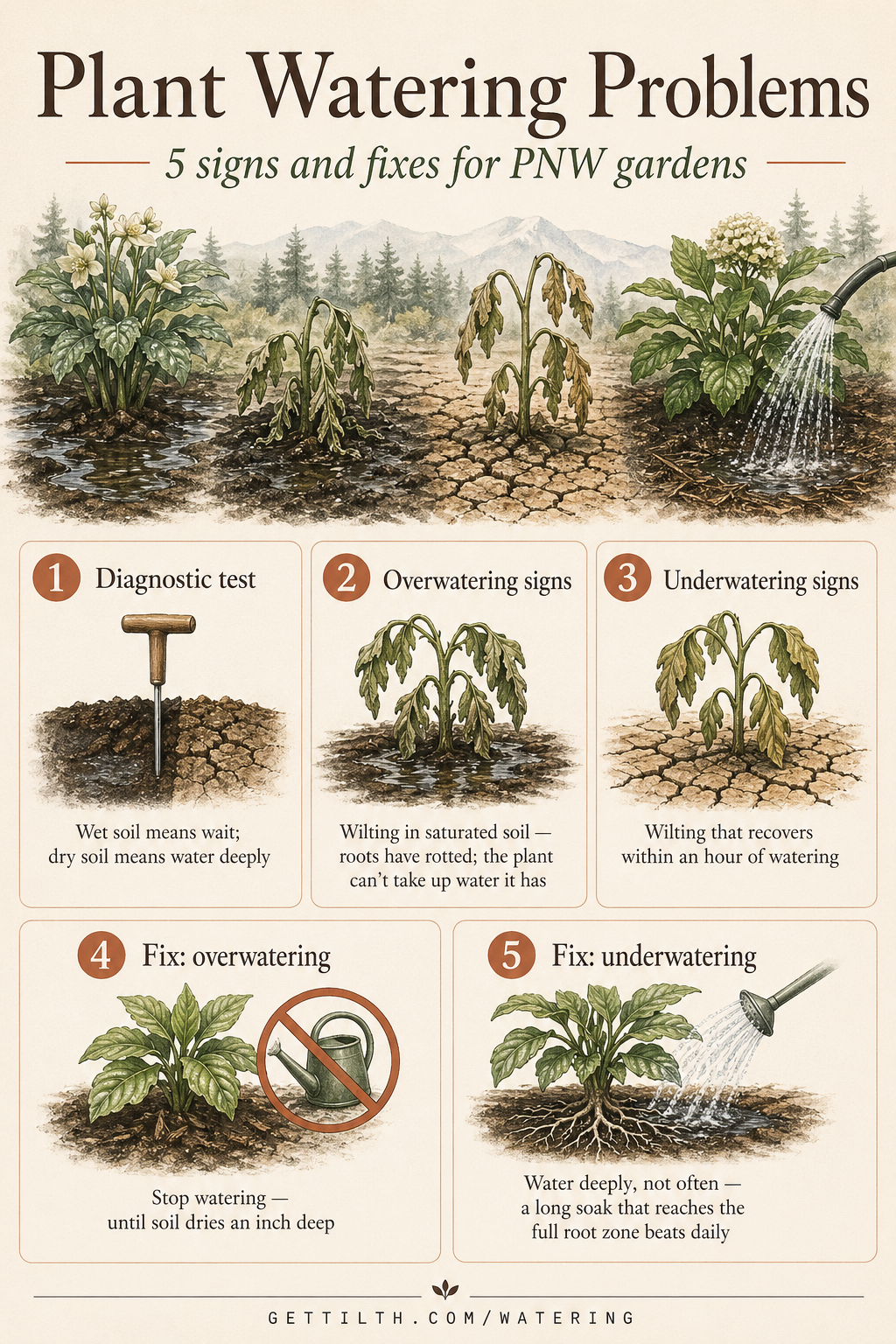
The diagnostic test
Stick a finger an inch or two into the soil:
- Wet, cool, heavy → don’t water
- Dry, dusty → water deeply
In containers especially, the surface and the root zone can disagree. Only the deeper check tells the truth. Surface dryness is misleading; surface moisture is misleading. Push your finger in.
Overwatering signs
- Wilting in saturated soil — roots have rotted; the plant can’t take up water it has plenty of
- Uniform yellowing across the plant
- Mushy stems or soggy soil with a sour, “off” smell (anaerobic decomposition)
- Fungus gnats hovering at the soil surface
- Mold or moss on the soil surface
Overwatering kills more houseplants than any other cause. In gardens, it’s most common in heavy clay soils that drain poorly, raised beds with insufficient drainage holes, and containers without proper drainage.
Underwatering signs
- Wilting that recovers within an hour of watering
- Crispy brown leaf edges
- Soil pulled away from the edges of the pot
- Plant noticeably lighter than usual when you lift it
- Curling leaves (downward, defensive)
Underwatering is more common in hot dry summer stretches, in containers that dry quickly, and in plants with shallow root systems that haven’t been mulched.
Fix for overwatering
- Stop watering until soil dries an inch deep
- Move containers off standing water trays
- Check drainage — every container needs a hole; beds in heavy clay may need compost worked in to break it up
- Don’t water on a schedule — water based on soil moisture
- For severely root-rotted plants — recovery is unlikely. Cut your losses, replant in better-drained soil
For garden beds with chronic drainage problems:
- Build raised beds in heavy clay
- Amend soil with compost (compost adds drainage AND moisture retention — both)
- Check grade — water shouldn’t pool in your beds after rain
Fix for underwatering
- Water deeply, not often — a long soak that reaches the full root zone beats daily sprinkles, which encourage shallow roots that crash the next time you skip a day
- Mulch 2–3 inches deep to slow evaporation and even out moisture swings
- For containers that have dried completely — soak the whole pot in a tub for 20 minutes. Dry soil repels water at first; surface watering runs straight through without soaking in
- Check moisture with your finger before watering, not on a fixed schedule
The “1 inch per week” rule is a starting point, not a law. Hot windy weeks need more; cool damp weeks need less. Watch the plants and the soil.
PNW-specific notes
PNW watering has an unusual seasonal pattern that catches new gardeners:
Winter (October–March) — almost no garden watering needed. PNW rainfall handles vegetables, perennials, and shrubs. The danger here is overwatering — supplemental watering on top of natural rainfall in already-saturated soil rots roots.
Spring (April–May) — variable. Watch the rain. April is often dry; May can be wet or dry.
Summer (June–August) — real watering is needed. PNW summers have long dry stretches (sometimes 6+ weeks without measurable rain). Drip irrigation or soaker hoses on a timer pay for themselves in saved plants.
Fall (September) — rain returns; reduce supplemental watering.
The most common PNW watering mistake: continuing to water through fall and into winter as habit. Stop in late September unless the plant clearly needs it.
Plant-specific notes
- Hydrangea — wilts dramatically when thirsty (great built-in moisture meter), recovers within hours of deep watering. Don’t panic; just water.
- Tomato — needs deep, consistent watering. Inconsistent watering causes blossom end rot.
- Lettuce — afternoon wilt that recovers overnight is normal. Don’t overwater in response.
- Blueberries — need consistent moisture; drip irrigation preferred. Don’t water overhead.
- Rhododendron — drought-tolerant once established. Wet feet (root rot) kill them faster than anything.
- Garlic — stop watering 2 weeks before harvest. Wet bulbs at harvest don’t store.
Related
- Yellow leaves — both over and under can cause this
- Wilting plants — wilting in wet soil = root rot, wilting in dry soil = thirsty
- Brown leaves — underwatering causes crispy edges
- Diseases — root rot is technically a disease (caused by waterlogged soil + fungal/bacterial pathogens)
- The diagnosis guide — full diagnostic framework