THE GUIDE
Growing Garlic in the Pacific Northwest
How to grow garlic in the PNW: October planting, winter care, hardneck varieties that thrive here, and how to harvest and cure for long storage.
Garlic is the PNW signature crop most new gardeners overlook because the planting season is wrong. You plant in October and harvest in July — nine months in the ground. The reward is huge: a bed of garlic supplies a year’s worth of cooking with minimal summer effort. Hardneck varieties dominate here; choose them over softneck for reliable PNW production.
Quick facts
- Plant: October to early November, 4 inches deep, mulched heavily
- Sun: 6+ hours direct
- Water: 1 inch/week April–June; stop watering 2 weeks before harvest
- Soil: pH 6.0–7.0, very well-draining
- Days to harvest: 240+ days (October to July)
When to plant
Plant in October to early November, after the first cool weather but before the ground freezes. Goal: roots establish before winter, foliage emerges in spring.
Buy seed garlic from a local nursery or farm — grocery store garlic is often a softneck variety unsuited to PNW and may be treated to prevent sprouting. Local seed garlic is bred or selected for our conditions.
Break heads into individual cloves just before planting. Plant the largest cloves (small ones produce small bulbs); save small cloves for cooking.
Planting depth: 3–4 inches deep, pointy end up, 6 inches apart. In rows 12 inches apart.
Mulch heavily: 4–6 inches of straw or leaves. Mulch insulates the cloves from winter cold, suppresses spring weeds, and retains spring moisture.
Varieties that work
Hardneck garlic (best for PNW):
- Music — porcelain type, large cloves, strong flavor, very reliable
- German Red — rocambole type, complex flavor
- Chesnok Red — purple-striped, mild and sweet
- Spanish Roja — heirloom rocambole, classic garlic flavor
- Killarney Red — early-maturing, large bulbs
Hardneck varieties produce scapes (curly flower stems) in late spring — see harvest section.
Softneck garlic:
- Inchelium Red, California Late — softneck types, store longer than hardnecks
- Generally less successful in PNW than hardnecks but worth a row if you want long-storage garlic
Sun and soil
Garlic wants full sun (6+ hours) and very well-draining soil. Wet feet over winter rots cloves before they have a chance to grow.
If your soil drains poorly, plant in raised beds or amend heavily with compost. Add a balanced organic fertilizer at planting.
pH 6.0–7.0 is ideal. PNW soil is generally acceptable without amendment.
Watering
Fall and winter: no watering needed. PNW rainfall handles it.
Spring (April–June): 1 inch per week if rainfall is light. Garlic does most of its bulb growth during this window.
Pre-harvest (last 2 weeks): stop watering. Dry soil during the final ripening period produces firmer, longer-storing bulbs.
Common problems
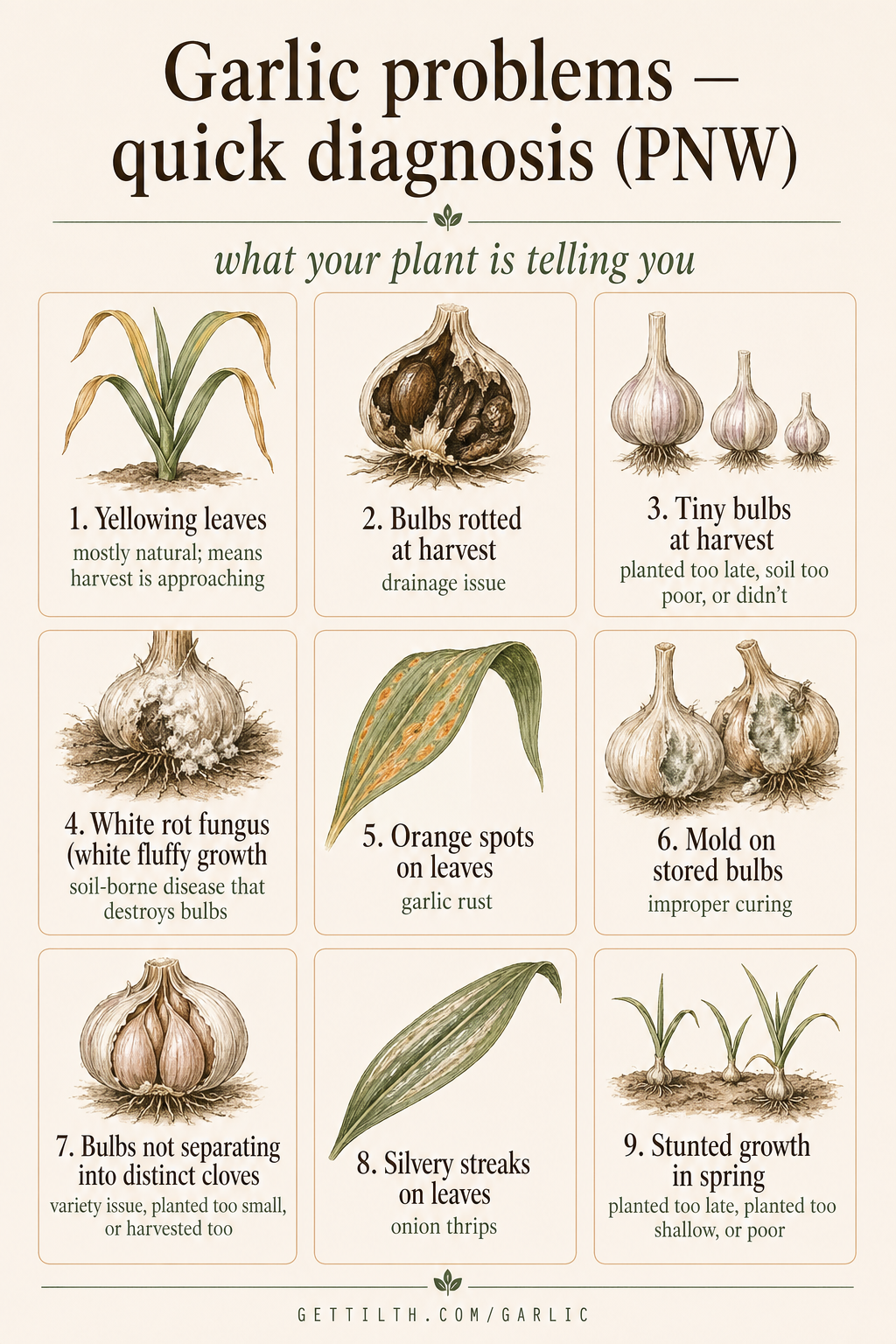
Garlic is largely problem-free in PNW once established, but here are the nine issues most often asked about:
- Yellowing leaves in early summer — mostly natural; means harvest is approaching. Bottom leaves yellow first as the plant moves energy into the bulb.
- Bulbs rotted at harvest — drainage issue. Plant in raised beds or amend heavily for next season.
- Tiny bulbs at harvest — planted too late, soil too poor, or didn’t fertilize in spring. Side-dress with compost or fish emulsion in March if plants look weak.
- White rot fungus (white fluffy growth at bulb base) — soil-borne disease that destroys bulbs. Rotate garlic out of affected beds for 4+ years.
- Orange spots on leaves — garlic rust. Common in wet PNW spring. Improve airflow; sulfur sprays for severe infections; plant in well-spaced rows.
- Mold on stored bulbs — improper curing. Cure in warm dry well-ventilated space for 2–3 weeks before storing.
- Bulbs not separating into distinct cloves — variety issue, planted too small, or harvested too early. Use larger cloves for next year’s seed.
- Silvery streaks on leaves — onion thrips. Minor pest in PNW; usually doesn’t affect bulb size. Insecticidal soap if severe.
- Stunted growth in spring — planted too late (after November), planted too shallow, or poor soil. Replant on schedule next year; mulch heavily.
Harvest scapes
Hardneck garlic produces curly flower stems (scapes) in late spring. Cut these off when they form a single full curl — usually mid-June. Removing scapes channels the plant’s energy into bulb growth and gives you a delicious harvest of garlic-flavored greens to use in stir-fries, pesto, or grilled.
Don’t skip this step. Scapes left on the plant divert energy from bulbs.
Harvest bulbs
Bulbs are ready when the lower 4–5 leaves have yellowed and dried, while the upper leaves are still green. Usually mid-to-late July in PNW.
Don’t pull garlic by the tops — they’ll break off. Loosen soil with a fork and lift the whole plant.
Cure for long storage: hang plants (with leaves attached) in a warm, dry, well-ventilated spot for 2–3 weeks. Don’t wash. After curing, trim the roots and tops, brush off loose soil, and store in a cool dry place. Properly cured PNW hardneck stores 4–8 months; softneck stores 6–10 months.
Related plants
- Onions, shallots, leeks — same family (Allium), similar requirements
- Tomatoes, peppers — garlic is a classic companion (planted in fall, harvested in time for warm-season crops)
- Strawberries — garlic interplants well, may deter some strawberry pests
For underlying patterns affecting garlic (drainage, fertilization timing), see the diagnosis guide.