THE GUIDE
Growing Strawberries in the Pacific Northwest
How to grow strawberries in the PNW: why Junebearers thrive and everbearers struggle, slug control, and the planting depth that makes or breaks the crop.
Strawberries are PNW signature fruit. Junebearer types thrive in our cool springs; everbearer types underperform. Slugs are the persistent enemy — they’ll destroy a strawberry patch faster than any other pest. Plant in March, expect heavy harvest in June, and net the plants before the birds discover them.
Quick facts
- Plant: transplant bare-root crowns March–April. Bury crowns level with soil — too deep, they rot; too shallow, they dry out.
- Sun: 6+ hours direct
- Water: 1–1.5 inches/week, water at soil level
- Soil: pH 5.5–6.5, well-draining, rich
- Days to harvest: ~60 days from planting for first-year light crop; full harvest in year 2
When to plant
Plant bare-root crowns in March or early April, as soon as soil can be worked. Order from a local nursery or PNW-focused supplier — bare-root crowns establish much faster than potted plants.
Container-grown plants can be transplanted later (April–June) but cost more and don’t establish dramatically faster.
Planting depth is critical. The crown (where leaves emerge) must sit exactly at soil level. Bury too deep and it rots; plant too shallow and the roots dry out. This is the single most common reason new strawberry plantings fail.
Varieties that work
Three categories of strawberries; only one is reliable in PNW:
Junebearers (best for PNW) — produce a single heavy crop in June, then send out runners.
- Hood — the PNW classic, large sweet berries, very productive
- Shuksan — Washington-bred, excellent flavor
- Totem — productive, good for processing
- Puget Crimson — newer WSU release, large berries
Everbearers — produce smaller crops over a longer season. Generally underperform in PNW.
- Quinault — best of the everbearers in PNW; still won’t match a Junebearer
- Albion — similar; better in California than PNW
Day-neutral — like everbearers, less reliable here.
For most PNW gardeners: plant Junebearers. Hood and Shuksan together give you a 4–6 week heavy harvest in June and easy runner production for expanding the patch.
Sun and soil
Full sun is best (6+ hours). Strawberries tolerate partial shade but produce less.
Soil needs to be well-draining and slightly acidic. Amend with 2–3 inches of compost worked in before planting; mulch with straw or pine needles after planting.
pH 5.5–6.5 — slightly more acidic than most vegetables. PNW soil often hits this naturally; if your soil is alkaline (above 6.8), add elemental sulfur.
Watering
1–1.5 inches per week, water at the soil line. Wet leaves invite leaf spot and gray mold.
Mulch with straw heavily — both for moisture retention and to keep berries off the soil (where they rot or get eaten by slugs). The “straw” in “strawberry” comes from this practice.
Common problems
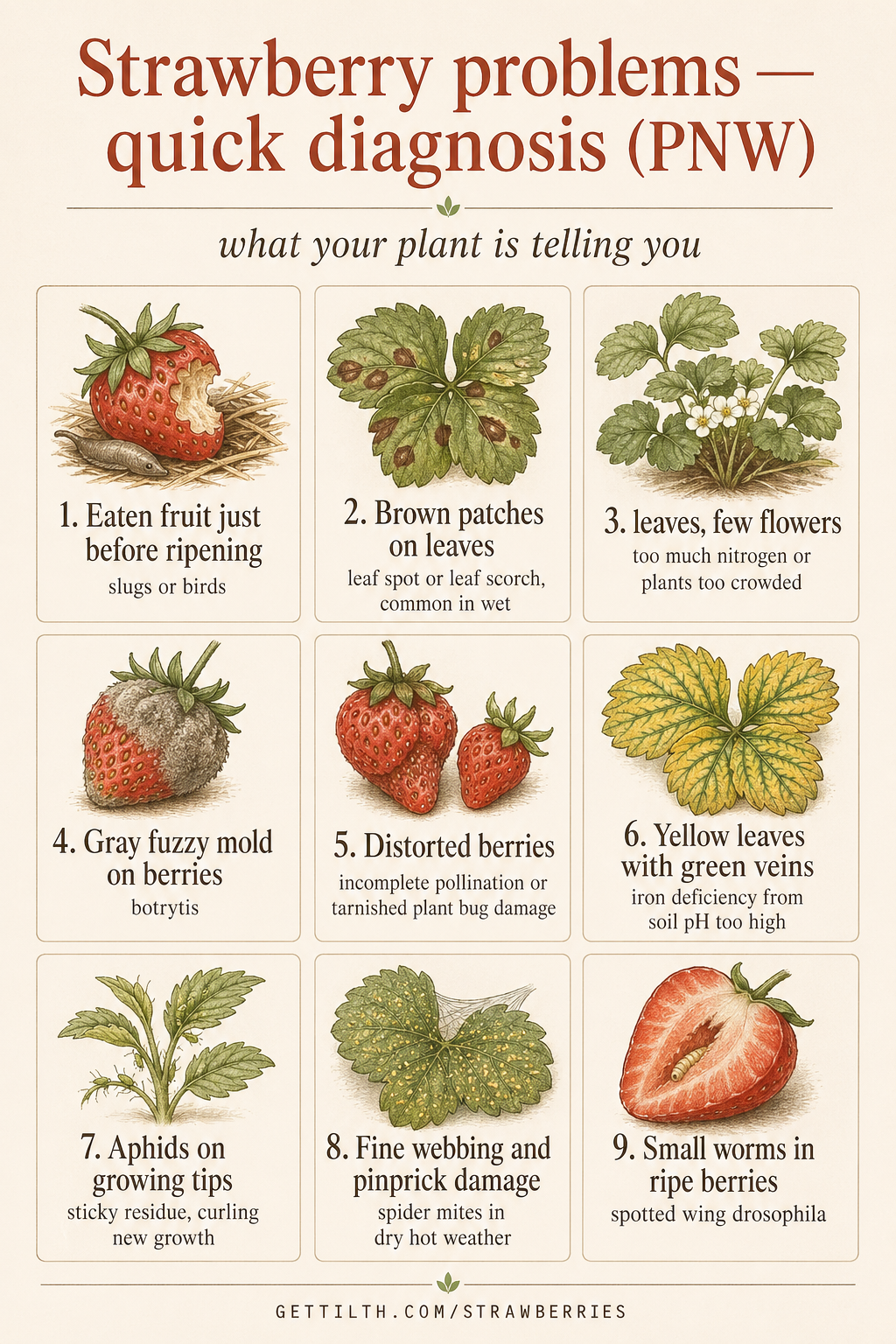
Nine most-asked-about strawberry problems in PNW gardens:
- Eaten fruit just before ripening — slugs (slime trail near damage) or birds (clean peck holes). Slugs: iron phosphate, beer traps, copper barriers. Birds: netting is the only reliable answer.
- Brown patches on leaves — leaf spot or leaf scorch, common in wet PNW springs. Remove affected leaves; improve airflow; thin runners.
- Lots of leaves, few flowers — too much nitrogen or plants too crowded. Don’t fertilize heavily; thin runners to 1–2 per plant.
- Gray fuzzy mold on berries — botrytis (gray mold). Common in wet conditions. Remove affected berries; improve airflow; mulch to keep berries off soil.
- Distorted berries — incomplete pollination (low bee activity) or tarnished plant bug damage. Hand-pollinate flowers if needed.
- Yellow leaves with green veins — iron deficiency from soil pH too high. Acidify with sulfur; mulch with pine needles.
- Aphids on growing tips — sticky residue, curling new growth. Wash off with strong water; insecticidal soap if persistent.
- Fine webbing and pinprick damage on leaves — spider mites in dry hot weather. Increase humidity; insecticidal soap.
- Small worms in ripe berries — spotted wing drosophila. Pick frequently and refrigerate immediately; drop infested berries in soapy water to break the cycle.
Harvest
Berries are ready when fully red on all sides. White or partially-pink berries are immature and won’t ripen further off the plant. Pick every 1–2 days during peak season — overripe berries attract slugs and rot.
Pinch the stem with the berry attached; don’t pull the berry off (it bruises).
After the June harvest, plants send out runners. To expand the patch: anchor runners where you want new plants (they’ll root naturally). To maximize next year’s harvest: trim runners and let the mother plant focus energy on next year’s crown.
Plant management over years
Strawberry plants peak in years 2–3 and decline after year 4. Best practice for a steady patch:
- Year 1: plant new bare-roots, light first-year crop
- Years 2–3: peak production
- Year 4: start a new patch from runners or fresh bare-roots
- Year 5: retire the original plants
Rotating the bed location every few years also helps prevent disease buildup.
Related plants
- Blueberries — different family but similar acidic soil preference; can plant nearby
- Garlic, onions — companion plants that may deter some strawberry pests
- Borage — attracts pollinators, improves fruit set
For underlying patterns affecting strawberries (slugs, watering, disease prevention), see the diagnosis guide.