THE GUIDE
Growing Kale in the Pacific Northwest
How to grow kale in the PNW: spring and fall plantings, overwintering for winter harvest, the cabbage worms every PNW gardener fights, and varieties that thrive in our cool climate.
PNW kale is a marvel. It survives PNW winters with minimal protection, tastes sweeter after frost, and overwinters reliably for early-spring harvest. Plant in spring for summer eating; plant in summer for fall, winter, and spring eating. The dominant problem is cabbage worms in summer; the second is the misconception that yellowing bottom leaves are a problem.
Quick facts
- Plant: transplant April–May for spring; July–August for fall and overwintering
- Sun: 4–6 hours direct, full sun ideal
- Water: 1–1.5 inches/week
- Soil: pH 6.0–7.5 (slight alkalinity tolerated, helps prevent clubroot)
- Days to harvest: 50–65 days from transplant for baby leaves; 70+ for full plants
When to plant
Spring crop:
- Start indoors: February to March
- Transplant: April to early May
- Harvest: May through summer
Fall and winter crop (the PNW classic):
- Direct seed or transplant: July through August
- Harvest: September through winter and into spring
Overwintering kale is the PNW signature — plant in late summer, harvest through fall, let it sit dormant in winter, then resume harvest in early spring before it bolts.
Varieties that work
Best for fresh eating:
- Lacinato (Dinosaur, Tuscan, Black) — flat dark blue-green leaves, the chef’s favorite. Reliable in PNW.
- Curly kale (Winterbor, Vates) — classic ruffled leaves, very cold-hardy
- Red Russian — flat red-veined leaves, tender, sweet, overwinters well
Heaviest producers:
- Winterbor — most productive, very hardy
- Lacinato — high quality, steady producer
For overwintering:
- Red Russian, Lacinato, Winterbor all overwinter reliably in PNW with minimal protection. Frost cloth in the coldest weeks helps but isn’t always required.
Skip Siberian or Asian kales unless you specifically want them — the standard varieties are easier and more productive.
Sun and soil
Kale tolerates partial shade better than most vegetables but produces best in full sun. 4–6 hours minimum.
Soil should be rich and well-amended. Kale is a heavy feeder over its long growing season. Amend with 2 inches of compost worked in before planting; side-dress with compost or fish emulsion mid-season for fall plantings.
pH 6.0–7.5 is ideal. Slightly alkaline soil helps prevent clubroot, the main brassica disease in PNW. If your bed has had brassica problems, add lime to push pH toward 7.0.
Watering
1–1.5 inches per week, deep watering. Mulch heavily to retain moisture and suppress weeds.
Kale is more drought-tolerant than lettuce or brassica heads but wilts visibly when stressed. Consistent watering produces the best leaf quality.
Common problems
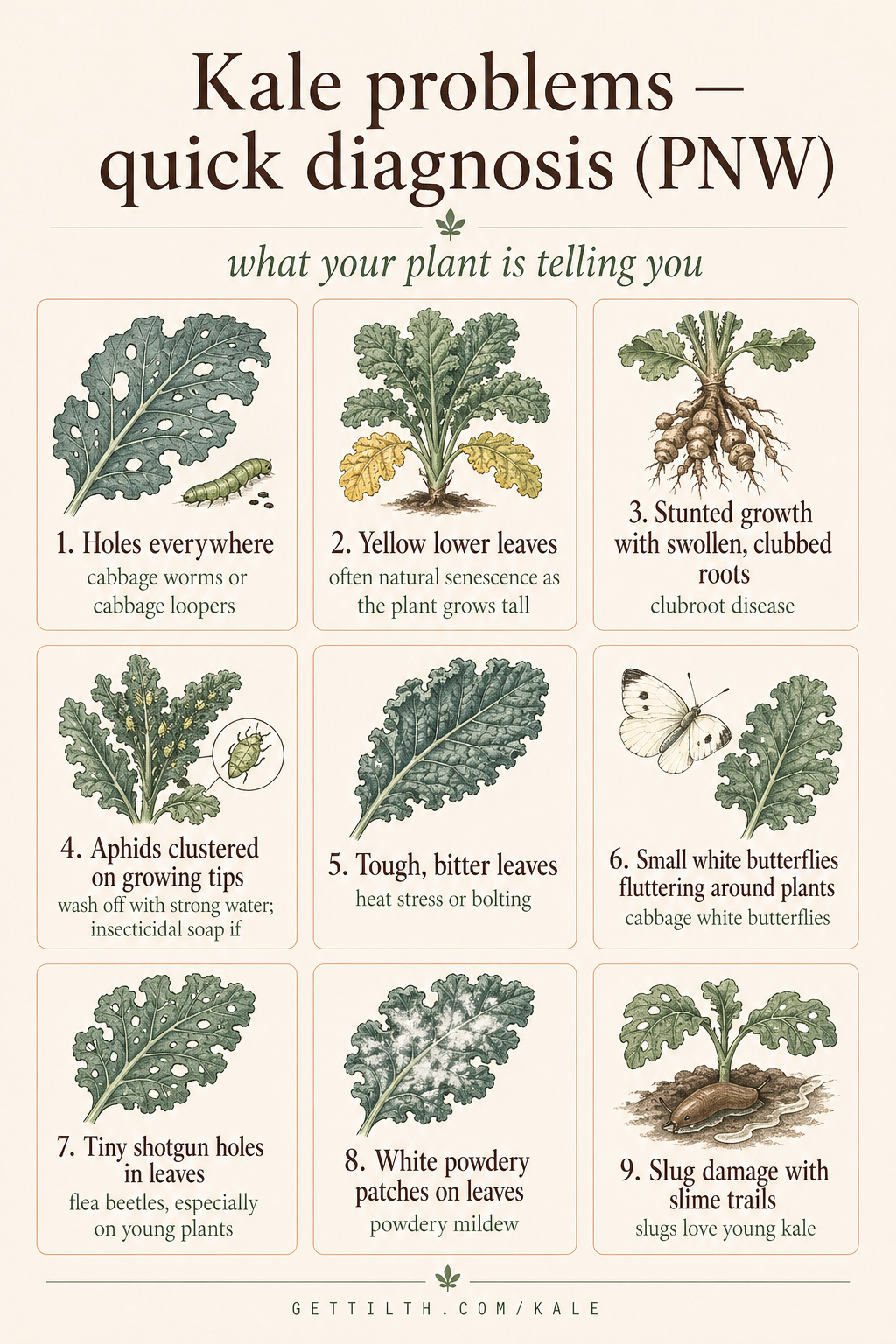
Nine most-asked-about kale problems in PNW gardens:
- Holes everywhere — cabbage worms (small green caterpillars on the underside) or cabbage loopers. The dominant PNW kale pest. Bt (Bacillus thuringiensis) is the standard organic treatment — selective, effective, harmless to non-target insects.
- Yellow lower leaves — often natural senescence as the plant grows tall. Not a problem; just pull them off.
- Stunted growth with swollen, clubbed roots — clubroot disease. Common in acidic soils with poor crop rotation. Add lime to raise pH; rotate brassicas every 3–4 years.
- Aphids clustered on growing tips — wash off with strong water; insecticidal soap if persistent.
- Tough, bitter leaves — heat stress or bolting. Harvest in cooler conditions; pull bolting plants.
- Small white butterflies fluttering around plants — cabbage white butterflies. They lay the eggs that become cabbage worms. Net young plants or use row cover.
- Tiny shotgun holes in leaves — flea beetles, especially on young plants. Row covers at planting prevent the worst.
- White powdery patches on leaves — powdery mildew. Less common on kale than other brassicas; improve air circulation.
- Slug damage with slime trails — slugs love young kale. Iron phosphate at planting; PNW slug pressure is constant.
Harvest
Two harvest approaches:
Bottom-up harvest (best for long-term production) — pick outer leaves once they’re 6+ inches, working from the bottom of the plant. The plant continues producing new leaves at the top. Single plants can produce for 6+ months this way.
Whole-plant harvest — cut the entire plant at the base when it’s full-sized. Better for quick succession but the plant won’t regrow.
Cover overwintering plants with row cover during the harshest weeks (mid-December to mid-January typically). Resume harvesting in late winter as conditions warm.
When the plant bolts in spring (sends up a flower stalk), the leaves turn bitter and tough. Harvest the flower buds (kale rapini — delicious sautéed) before the plant fully flowers.
Related plants
- Lettuce — similar cool-season profile but bolts faster
- Cabbage, broccoli, cauliflower — same family (Brassicaceae), share pests and diseases
- Chard, spinach — different families, share growing conditions
- Garlic, onions — companion plants that may deter some pests
For underlying patterns affecting kale (cabbage worms, clubroot, heat stress), see the diagnosis guide.